
Key points
Regular, tailored movement is usually part of recovery. Increase activity gradually, guided by wound healing and nerve function.
Your discharge plan and the instructions from your surgical team take priority over general timelines.
New bladder or bowel problems, numbness around the groin, or new or rapidly worsening paralysis need immediate assessment.
Who this guide is for
This guide is for adults recovering from surgery for lumbar spinal stenosis without an additional spinal fusion. A different recovery plan may apply after fusion with screws or implants, an injury to the dura around the nerves, or other complications.
Regular, tailored movement is usually part of recovery. The specific operation, wound healing and nerve function determine how to increase activity. Your discharge letter and the personal instructions from your surgical team take priority.
What to expect after surgery
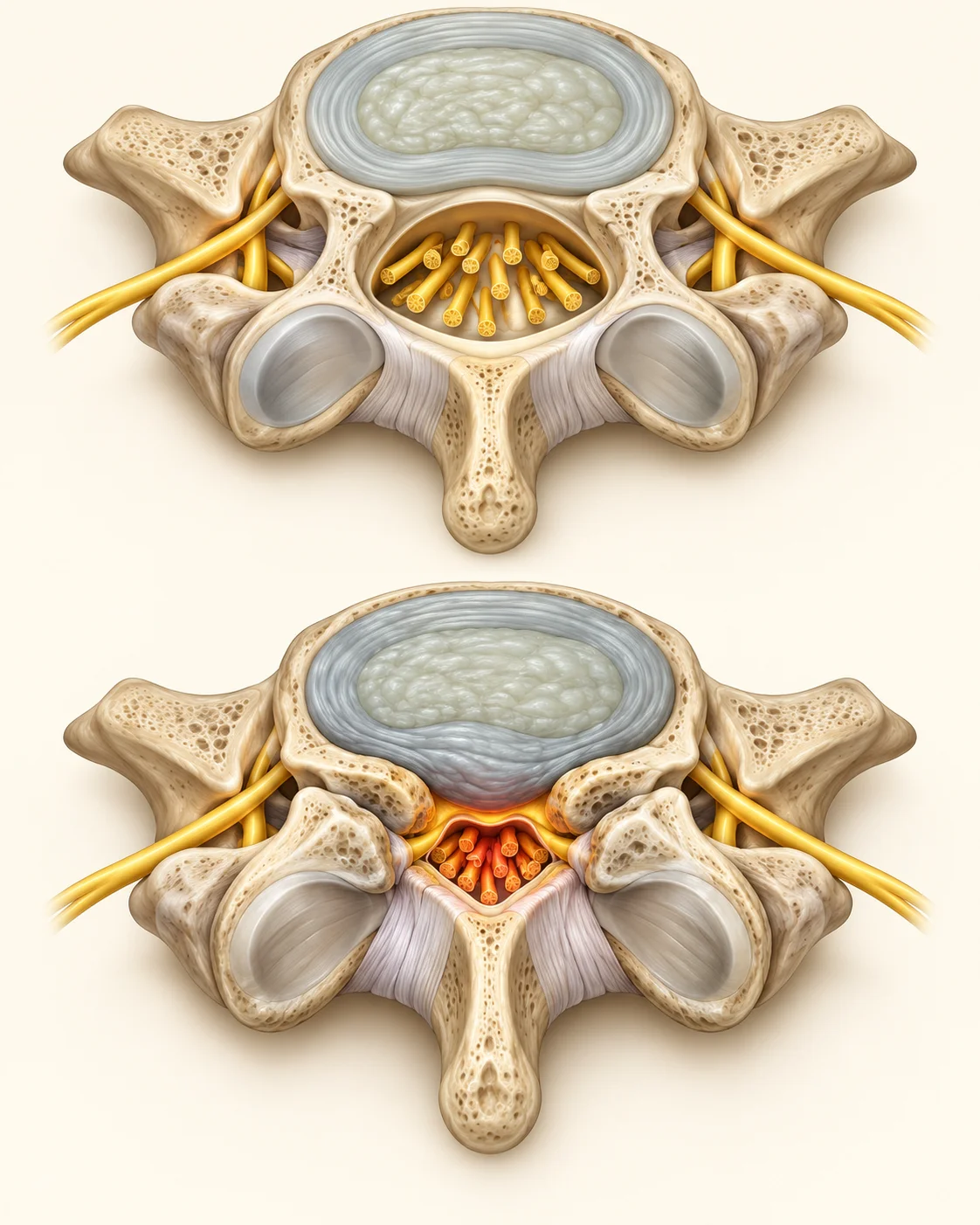
Decompression removes tissue that is narrowing the space for the nerves, such as thickened ligaments or parts of bone. The main aims are to ease leg pain when standing and walking and to improve walking ability. Back pain can have several causes and may not go away completely.
Wound pain and soreness in the back muscles can occur at first. Nerve pain may fluctuate. Numbness and weakness can take longer to improve than leg pain, and longstanding nerve damage may remain. A small skin wound does not mean that recovery is complete.
Leg pain and walking ability may continue to improve beyond the first three months, and further recovery can happen later. No exact course can be promised for an individual.
Notice changes in what you can do
From time to time, note how far you can walk, whether standing up is getting easier and how much pain medicine you need. Compare several days or weeks rather than individual hours. Do not wait out a new neurological problem as a normal fluctuation.
When to seek urgent help
New difficulty emptying your bladder or new loss of bladder or bowel control, numbness around the groin or genitals, or new or rapidly worsening paralysis needs immediate assessment in an emergency department.
Call 112 for sudden shortness of breath, chest pain or collapse. A newly swollen and painful leg on one side needs prompt assessment. Contact your care team about fever, increasing wound redness, discharge or severe worsening pain. Clear fluid from the wound or a marked headache that changes with position should also be assessed.
Gradually return to daily activities
1
Getting up and walking
Start moving when your care team says it is safe. At home, several short walks are often easier than one long walk. Begin on level ground at a safe pace. A walker or walking stick may help temporarily if you feel unsteady.
2
Repeat short walks regularly
If a short walk feels safe, repeat that distance before trying to go much farther. Then increase individual walks gradually. There is no step count that every patient needs to reach.
3
Use symptoms as feedback
Mild muscle soreness can happen with activity. Clearly worsening or persistent symptoms are a reason to reduce the amount. New radiating pain, increasing numbness or weakness needs medical advice. Walking safety matters as much as pain levels.
4
Sitting, lying down and stairs
Alternate sitting, walking, standing and resting. There is no general evidence-based maximum sitting time. Sleep in a comfortable position; a pillow may help. When getting out of bed, it may feel easier to roll onto your side and push up with your arms. Practise stairs with guidance if you feel unsure, use the handrail and do not carry heavy loads.
Lifting, housework and wound care
Arrange help at first with heavy shopping, crates of drinks, strenuous vacuuming, gardening and moving furniture. Keep light objects close to your body and split loads into smaller parts.
Postoperative advice differs between clinics on weight limits and how long restrictions should last. There is no single kilogram limit proven for every decompression. Follow the instructions from your surgical team until you can check with them. Over time, you should work towards doing everyday bending and lifting safely again. Heavy loads are not a suitable test during early healing.
When you can shower depends on how the wound was closed and on your dressing. Follow your hospital’s instructions. Wait until the wound is fully healed and you have been cleared before bathing or swimming. Have a wound checked if it is wet, increasingly red or opening.
Eat regular meals and maintain adequate nutrition. If you have a fluid restriction for heart or kidney disease, follow your medical plan. Ask early about constipation, especially if you take opioids. If you smoke, ask about help to stop. Alcohol can increase the sedating effects of some pain medicines; ask your clinic or pharmacist if you are unsure.
Medicines and follow-up
Questions to clarify before going home
Use pain medicines safely
Your discharge plan should say which medicines to take regularly and which to use as needed. Ask how to reduce the dose as you improve and what to do about side effects. Pain relief should make sleep and movement possible. Opioids can cause drowsiness and constipation. Some medicines for nerve pain can affect alertness or balance. Do not suddenly stop medicines you have taken for a long time without advice.
Blood thinners and clot prevention
Get written instructions on when to restart any blood thinner that was paused and whether you need additional clot prevention. The medicine and duration depend on your risk and operation. Do not start, change or stop this treatment on your own.
Do I need a brace?
Decompression without fusion does not by itself mean that you need a brace. If one has been prescribed, ask what it is for and how long to wear it. Do not buy a brace as a substitute for your personal recovery plan.
Follow-up and imaging
Attend the planned wound and recovery checks. Bring an up-to-date medicine list and your questions. Further imaging depends on your progress and examination; new nerve symptoms need prompt reassessment.
Clarify before discharge
What activity limits apply? Who will check the wound? When is the next appointment? How should physiotherapy begin? Which number should you call if a problem comes up? Ask the team to explain any unclear instructions.
How physiotherapy can help
Physiotherapy can focus on abilities that are difficult in daily life, such as safe walking, stairs, balance, leg strength and gradually increasing trunk strength. Surgery relieves pressure on nerves; it does not immediately reverse weakness that developed beforehand.
Your first guidance on getting up and walking may begin in hospital. Wound healing, the operation and your neurological findings matter before starting a more extensive exercise programme. There is no single start day that suits everyone.
Physiotherapy may be useful after surgery for lumbar spinal stenosis. The exercises and amount of training should suit your abilities and examination findings.
After an assessment, a programme might include walking practice, controlled sit-to-stands, supported balance exercises and gradual strengthening of the legs and trunk. These are possible activities, not an exercise prescription for the first few days. Foot weakness needs particular attention to walking, fall risk and possible aids. Clear instructions and achievable steps can help if you are afraid to move.
Some people do well with a home programme after instruction; others need closer support. There is little research specifically on lumbar stenosis, and much of what is known comes from other spine operations. The best programme and start time after stenosis surgery remain uncertain.
Early movement is different from intensive training
Passive treatments may ease symptoms in some cases. Building the abilities you need for everyday life remains an important rehabilitation goal.
A gradual plan with individual steps
These stages describe goals, not a fixed weekly schedule or medical clearance. Your plan may need to change after a fusion, a fluid leak around the nerves or other complications.
1
Become safely mobile
First days: get up, walk short distances and practise stairs with guidance if needed. Understand wound care and your medicine plan.
2
Build up daily activities
First weeks: repeat short walks, take on light tasks and alternate activity with rest.
3
Start targeted training
When the wound has healed appropriately and your team agrees, gradually build strength, balance and endurance. Choose exercises that address your weaknesses.
4
Return to greater demands
Try work and sport step by step. Movement control, nerve function and how well you tolerate the activity all matter.
A simple way to increase activity
Change one part of your activity at a time, such as walking distance or the number of exercise repetitions. Then see how you feel during and after it. If symptoms stay worse, reduce the amount and ask your care team. Regular feedback can help adjust your programme. A technical gait analysis is not needed for every patient.
Work, driving, sport and travel
Driving
You need to get in and out safely, operate the vehicle fully and perform an emergency stop. Leg weakness or medicines that affect you can make driving unsafe. A set number of days alone does not mean you are cleared. Driving for work may involve additional demands.
Work and a gradual return
Desk work with opportunities to change position differs from heavy lifting or prolonged professional driving. Four to six weeks can be a rough guide for returning to work, but it is not personal clearance. A phased return may help.
Sport
Walking is usually the easiest activity to pace at first. Wait until the wound has fully healed before swimming. Cycling also requires balance and safe braking. Running, heavy strength training and sports with a risk of falls or contact need a further gradual build-up. Fixed clearance dates do not suit every operation.
Sex and travel
There is no single proven date for resuming sex. Comfort, protecting the wound and any surgical restrictions matter. Stop if you develop symptoms. On longer trips, plan to change position and move around. Ask your care team first if your mobility is limited or your wound is recent.
Do I need rehabilitation?
Not everyone needs inpatient or day-patient rehabilitation after an uncomplicated decompression. It may help if you have major limitations, need support or face difficulty returning to work. Discuss this with your care team and hospital social worker. The potential benefit of active rehabilitation does not mean everyone needs an inpatient programme.
What the findings mean for you
Active rehabilitation may improve everyday function after stenosis surgery, but the available evidence is limited. The best programme and start time have not been established for everyone.
For some people with degenerative spondylolisthesis, decompression without an additional fusion can have similar long-term results. This does not mean fusion is unnecessary for everyone. The decision depends on the individual findings, and the comparison does not define one recovery plan for all.
Key takeaways
- Active rehabilitation may improve function after lumbar stenosis surgery. The best method and amount of exercise are still uncertain.
- Wound care, gradual increases in activity and practical advice can differ between hospitals.
- There are no fixed limits for sitting, lifting, driving or sport that apply to every patient. A date on the calendar does not replace an examination of your wound and nerve function.
- Keep moving regularly within the limits your team has given you. Increase activity gradually and ask for targeted help if you have lost abilities. Seek immediate help for new paralysis, bladder or bowel problems, or numbness around the groin. Your personal recovery plan takes priority.
Questions for your follow-up
How far can I walk? Which activities are still difficult? Which medicines am I actually taking? Has my leg strength changed? What work or sport activity would I like to try next?