Key points
Start with short walks and increase activity gradually. Prolonged bed rest is not usual after an uncomplicated operation.
Your own discharge plan takes priority over general timelines in this article.
New weakness, bladder or bowel problems, or numbness around the groin need immediate assessment.
Who this guide is for
This guide is for recovery after an uncomplicated lumbar discectomy, microdiscectomy or nucleotomy without spinal fusion. Different instructions apply after a dural tear, repeat operation, paralysis or other special circumstances. Your discharge plan takes priority.
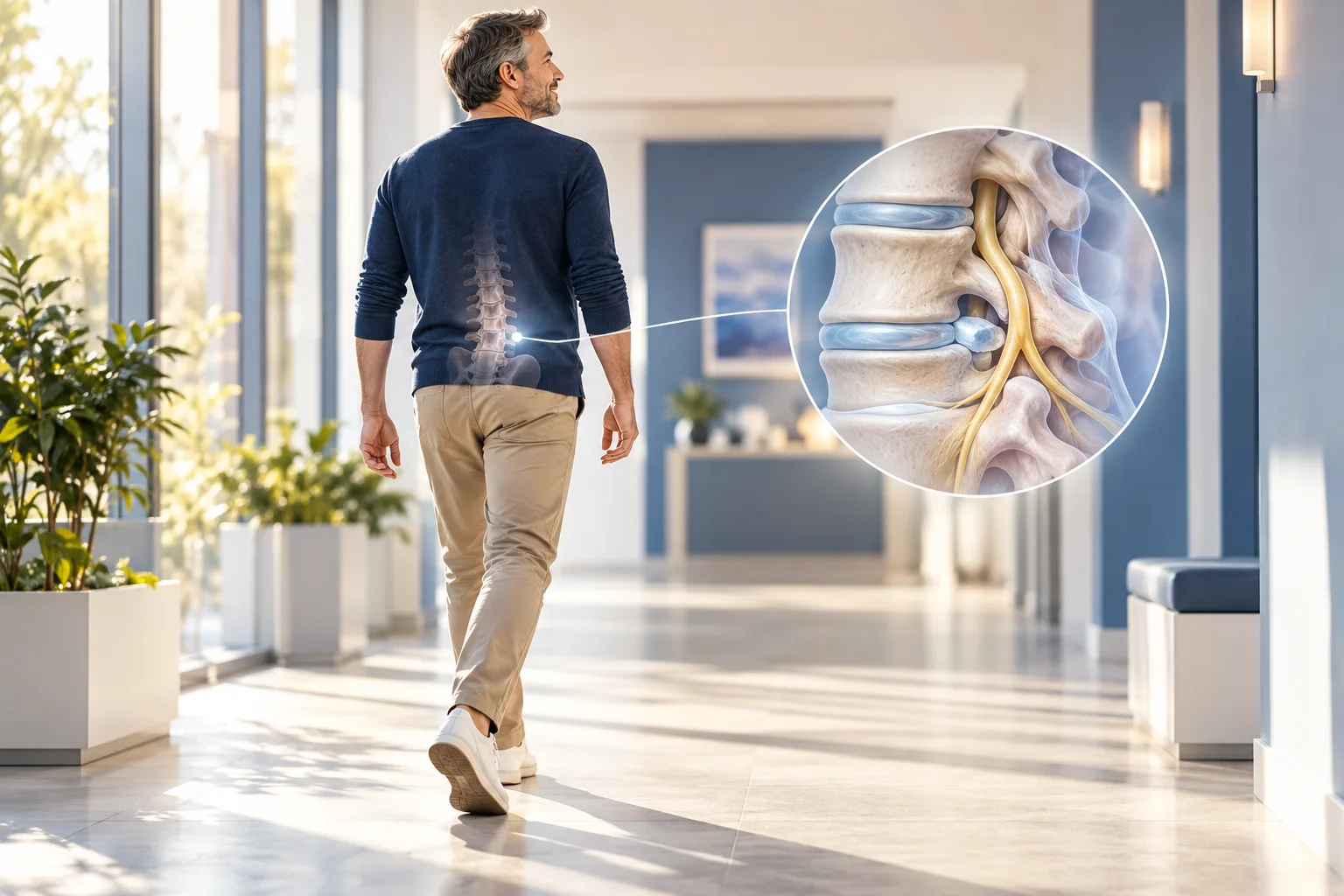
Surgery removes disc material pressing on a nerve root. Leg pain may ease quickly, while numbness often improves more slowly, sometimes over months, and may not resolve completely. Wound pain and tiredness are possible at first. Watch whether walking and everyday tasks become easier over time.
Managing daily life at home
The basic approach is to move early, pace activity and take regular breaks.
1
Walking and stairs
Take short, manageable walks throughout the day and increase distance as you are able. Stairs are possible if strength and balance are adequate; use the handrail.
2
Sitting, lying and getting up
Change position between sitting, standing and walking. One fixed sitting limit does not suit everyone. When getting out of bed, rolling onto your side and using your arms to push up may help.
3
Lifting and housework
Ask others to handle heavy shopping and demanding chores at first. Start with light objects close to your body and avoid sudden loads. Agree on a personal lifting limit with your team; the duration and extent of general restrictions remain uncertain.
4
Wound and medicines
Follow your discharge letter for showering, dressings and stitch removal. Wait for the wound to heal before bathing or swimming. Take pain medicines as prescribed and discuss reducing them. Do not start or stop blood thinners on your own.
A guide to building activity
These stages describe goals, not fixed dates for clearance. Surgical findings, wound healing and nerve function determine the pace.
1
Early stage
Get up safely, walk short distances, manage basic needs at home and continue tailored hospital exercises.
2
First weeks
Extend walks and light daily tasks. Plan physiotherapy if limitations persist.
3
Targeted strengthening
Build strength and endurance. Many studies started programmes four to six weeks after surgery; this is not a required waiting period.
4
Return to greater demands
Try work and sport activities step by step. Seek individual clearance for heavy loads.
Watch how symptoms change
If an activity clearly increases radiating leg pain or causes lasting worsening, reduce the load and discuss it with your team. New weakness is a warning sign.
How physiotherapy can help
A 2025 systematic review of 55 randomised studies involving 4,311 people suggests that physiotherapy improves pain and function. Programmes and operations varied considerably. No single best programme or start date has been established for everyone.
Depending on your findings, active rehabilitation may include trunk and hip exercises, endurance training and practising daily movements. Weak muscles call for a focused check of gait and strength. Set concrete goals for your own daily life. Practise an exercise such as controlled standing only when safe and after instruction.
A guided home programme can be useful. An older Cochrane review found no clear advantage for supervised over home exercises, but the evidence was low to very low quality. That does not make them equivalent for everyone. People who are unsure or have neurological deficits need individual support. A 2026 exercise review included people who had not had surgery and cannot define a discectomy recovery plan.
Do I need formal rehabilitation?
Outpatient or inpatient rehabilitation may be useful when function is substantially limited or returning to work is difficult. After an uncomplicated recovery, outpatient physiotherapy and home exercises may be enough. Discuss the need and application early with the hospital and social work team.
When can I drive, work and exercise?
Returning depends on your healing, the demands of the activity and personal medical advice. These are guides, not clearance dates.
Driving
Drive only when you can react safely and perform an emergency stop. Impairing medicines or significant leg weakness make driving unsafe. Check medical instructions and your insurance.
Desk work
Often possible after several weeks. Consider sitting tolerance and travel to work; a gradual return may help.
Physical work
Usually later than desk work. Prepare for lifting and repeated loads; full return may take around three months or longer.
Sport
Start with walking, then build endurance and strength as healing permits. Seek individual advice before running, contact sports or heavy loads.
Sexual activity
Ask your team if you are unsure about resuming it. The reviewed studies do not establish one timeframe for everyone.
When to get emergency help
New trouble emptying the bladder, loss of bladder or bowel control, numbness around the groin, or new or worsening paralysis needs immediate assessment in an emergency department. Do not wait for the next appointment. Clear fluid from the wound together with headache or fever, or a newly painful swollen leg also needs urgent assessment. For sudden breathlessness or chest pain, call emergency services (112 in Germany).
When to contact the hospital the same day
Contact the operating hospital for fever, increasing redness, swelling or fluid from the wound, or clearly worsening pain. Severe headache that changes with position after surgery also needs prompt assessment.
Common questions
Avoid smoking and pay attention to nutrition and sleep. Good diabetes control is sensible. Discuss a lasting fear of movement so you can become active safely again.