
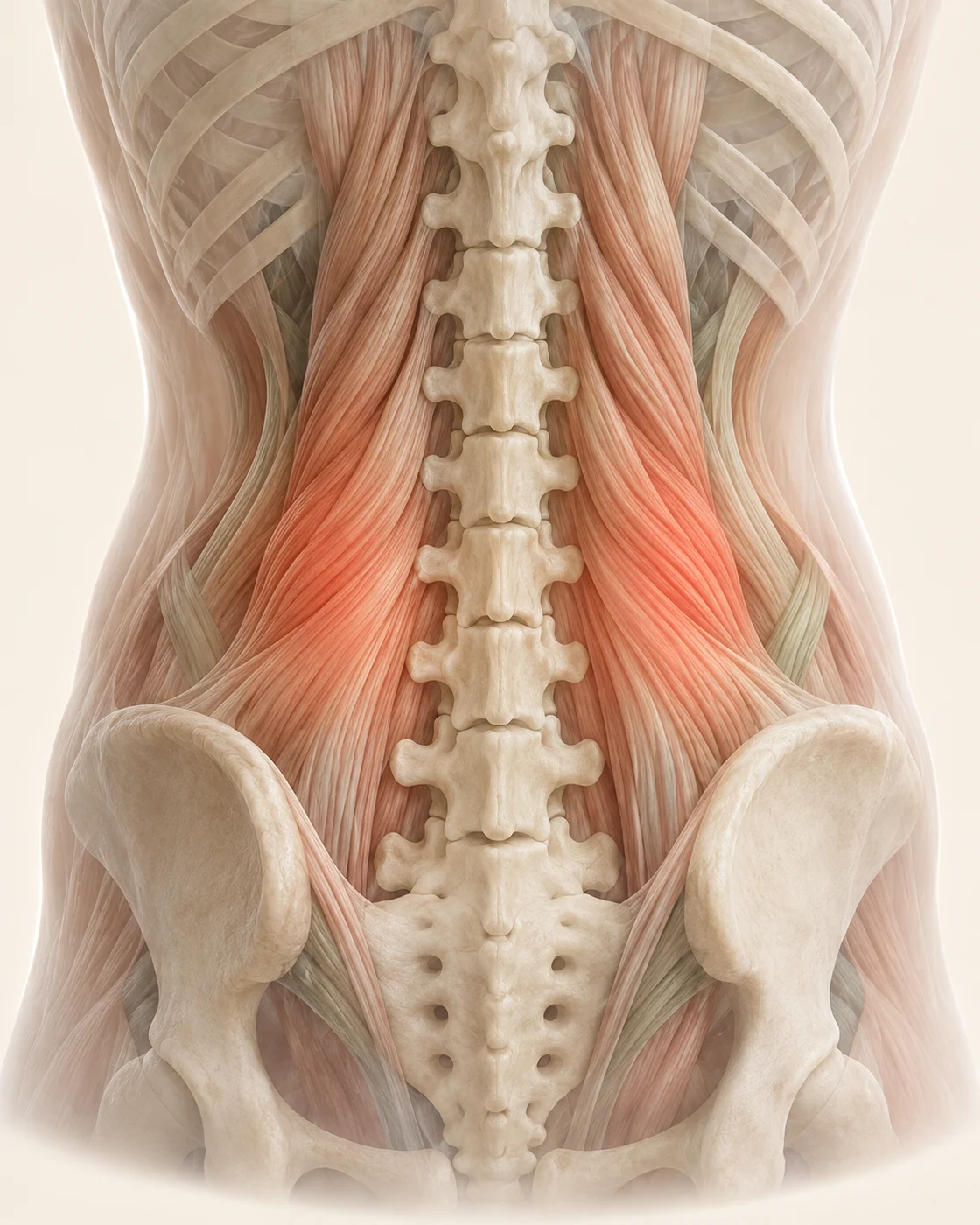
In brief
Most acute low back pain is non-specific: there is no single clearly identifiable structural cause.
Many episodes improve on their own; staying active as tolerated is usually part of recovery.
Pure low back pain cannot be treated by endoscopy. Radiating leg pain needs a separate assessment.
What are the symptoms of acute low back pain?
Low back pain is common and may start suddenly, sometimes without an obvious trigger. An acute episode can feel dramatic and make ordinary movement difficult. Symptoms may include:
- Pain across the lower back, sometimes extending into the buttocks
- Tight, tense or cramped back muscles
- Stiffness or difficulty bending, turning and getting up
Non-specific back pain is the most common pattern. Other episodes have a specific cause that needs assessment. The intensity of pain alone does not establish whether there is an injury or a disc problem. Many uncomplicated episodes begin to settle within one or two weeks, although recovery can take longer.
When should you seek urgent help?
Seek emergency care for new bladder or bowel problems, numbness around the genitals or anus, or new weakness in both legs. Get prompt medical advice for rapidly worsening pain, fever or feeling unwell, or pain after a significant injury.
What are the causes?
Acute low back pain may follow a strain, but there is often no single event that explains it. Possible triggers include:
- Lifting a heavy load or an unfamiliar physical effort
- Coughing, sneezing or a sudden twisting movement
- A small everyday movement, or no clear trigger at all
The muscles may tighten strongly around the painful area, making the back feel rigid. These symptoms do not automatically mean that a disc is damaged or that a herniated disc is the cause.
Why is a scan not always needed?
For uncomplicated non-specific back pain, an X-ray, CT or MRI usually does not explain the pain or change the initial treatment. Assessment starts with your symptoms and examination. Imaging may be appropriate if a specific or serious cause is suspected, or if the result would change management.
How is sudden-onset back pain best treated?
After assessment where needed, uncomplicated acute back pain is usually managed with time, reassurance and gradual movement. Severe pain can be frightening, but many episodes improve without an operation.
Continue your normal daily activities as much as you can tolerate. Gentle movement and a gradual return to work can help. Prolonged rest, especially bed rest, is generally not recommended because it can increase stiffness and weaken the muscles.
If pain makes everyday activity difficult, discuss suitable pain relief with a doctor or pharmacist. A warm shower, bath or safely applied local heat may soothe tight muscles, but does not remove an underlying cause. Physiotherapy with appropriate movement and exercise may support recovery.
Arrange a review if the pain is not improving, keeps returning or prevents ordinary activity. The plan should be adjusted to your symptoms and progress.
Pure low back pain cannot be treated by endoscopy
Endoscopy is not a treatment for isolated, non-specific low back pain.
Endoscopic spine surgery is considered for selected problems involving nerve compression that matches the symptoms, examination and imaging.
What if I have leg pain as well as back pain?
Pain travelling from the back or buttock into the thigh, lower leg or foot may be sciatica when a nerve is irritated. Not every pain that extends into the leg is sciatica; the pattern and examination help identify the cause.
Radiating leg pain may begin with the back pain. Sometimes the back pain improves first, while the leg pain appears later and persists. Tingling, numbness or weakness may also occur.
Leg symptoms deserve their own assessment. A clinician can check whether a disc herniation, spinal stenosis or another condition is affecting a nerve, and discuss appropriate treatment.